Choosing the 2026 best Turf Rakes requires more than comparing photographs, prices, or online ratings. Global buyers need evidence about soil conditions, turf species, labor efficiency, durability, and responsible water use. This guide examines professional rake designs for golf courses, sports fields, landscaping companies, municipalities, and serious groundskeepers.
Industry data provides useful context. FAO AQUASTAT reports that agriculture accounts for about 70% of global freshwater withdrawals, although turf maintenance represents only a small portion of that demand. The report still highlights why efficient soil preparation and careful surface management matter. The U.S. Golf Association’s Golf Course Environmental Profile also examines maintenance practices, labor demands, and resource management across golf facilities. These findings support a practical point: a rake cannot reduce irrigation alone, but it can improve seedbed preparation, thatch removal, and surface consistency.
Professional experience remains essential. A spring-tine rake may feel smooth on dry Kentucky bluegrass, yet struggle with wet, compacted clay. A rigid landscape rake may level a construction site but damage delicate playing surfaces. Buyers should inspect tine spacing, working width, handle comfort, coating quality, replacement parts, and shipping protection. Small details matter.
No ranking is perfect. A lightweight rake may suit a stadium crew, but not a contractor clearing heavy debris. This comparison therefore balances field performance, published specifications, user feedback, and supplier reliability. The final choice should match local turf, climate, workload, and maintenance standards—not a marketing promise.
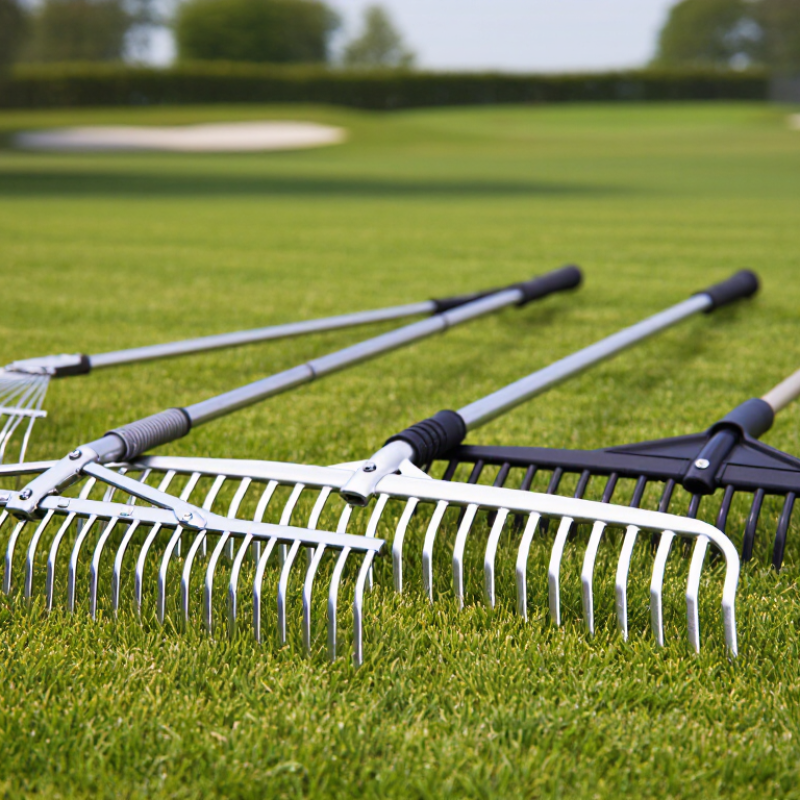
A turf rake is a maintenance tool for natural grass and synthetic sports surfaces. Its teeth lift flattened fibers, remove loose thatch, and spread infill more evenly. On a synthetic field, the rake usually moves through the pile without cutting the backing. This action restores fiber position after foot traffic, rain, or routine cleaning. The operator should work in several directions. One pass is rarely enough.
The FIFA Quality Programme Handbook explains that football turf testing examines ball roll, shock absorption, and surface interaction. These results can change when infill becomes uneven or fibers lie flat. A correctly selected rake helps protect those performance conditions. For natural turf, the USDA reports that soil compaction limits air and water movement around grass roots. Light raking can open the surface, but aggressive teeth may tear crowns or expose soil. That risk is easy to underestimate.
Turf managers should match rake spacing, tooth stiffness, and working depth to the surface. Softer teeth suit delicate grass. Wider spacing is safer for longer synthetic fibers. Check the surface after a short trial area. Look closely. If fibers pull out, stop.
The Sports Turf Managers Association recommends recording maintenance activities and field conditions. That practice improves consistency across seasons and climates. Still, no rake solves poor drainage, excessive compaction, or contaminated infill. A practical inspection should include pile height, moisture, surface firmness, and visible debris. The best choice is not always the most aggressive tool.
2026 Best Turf Rakes for Global Buyers?
Turf rake selection should follow the ground, not only the advertised width. Spring-tine rakes suit lawns, golf surrounds, and sports fields with light thatch. Their flexible teeth lift dead grass without scraping deeply. For compacted or heavily matted turf, a scarifying rake removes denser material. It needs controlled pressure and careful follow-up watering. Drag rakes work well after topdressing, helping spread sand across uneven playing surfaces. However, they can disturb fragile grass if pulled too aggressively.
Hard tine rakes are useful for rough ground, gravel edges, and renovation work. They collect stones, roots, and stubborn debris better than flexible models. A lute-style rake offers a flatter head for smoothing soil and distributing topdressing. Narrow rakes can reach around trees, benches, and drainage channels. Wide heads cover more ground, but they may miss dips and corners. Bigger is not always better.
Tips: Match tine stiffness to soil resistance. Check handle length before long sessions. Test one small area first. Clean wet debris from the head after use, because trapped material adds weight and strains the operator. I once assumed a stronger rake would finish every task faster; it did not. On soft turf, it left visible grooves. That mistake shows why local soil, grass species, moisture, and maintenance goals deserve equal attention. Replacement tine availability also matters for global buyers, especially where seasonal shipping can be slow.
| Turf Rake Type | Recommended Ground | Main Tasks | Typical Working Width | Tine or Head Design | Key Benefits | Important Limitations |
|---|---|---|---|---|---|---|
| Spring-Tine Lawn Rake | Established lawns, sports turf, cool-season and warm-season grass | Removing leaves, loose thatch, grass clippings and light surface debris | Approximately 35–60 cm | Flexible steel or polymer tines with moderate spacing | Good surface coverage; gentle on healthy turf; suitable for routine maintenance | Less effective on dense thatch or compacted soil; flexible tines can wear over time |
| Thatch Rake | Lawns with a visible thatch layer, including home lawns and managed turf | Pulling out dead stems, runners and organic material accumulated between soil and grass | Approximately 30–40 cm | Rigid, sharp tines or blades designed to penetrate below the grass canopy | Provides stronger vertical action; useful for targeted dethatching | Can damage desirable grass if used aggressively; requires careful depth control |
| Scarifying Rake | Renovation areas, heavily thatched lawns and turf requiring surface opening | Removing thatch and lightly cutting through the upper turf layer before reseeding | Approximately 30–38 cm for manual models | Fixed metal blades or rigid teeth with a more aggressive cutting profile | Effective for renovation; improves seed-to-soil contact when used correctly | Not intended for frequent light grooming; may leave the surface temporarily rough |
| Landscape Leaf Rake | Large lawns, parks, garden beds and areas with leaves or organic litter | Gathering leaves, twigs, grass clippings and loose garden debris | Approximately 45–75 cm | Wide fan-shaped head with flexible metal, bamboo or polymer tines | Moves large volumes quickly; wide coverage reduces walking time | Usually too flexible for compacted thatch; wide heads can be difficult in narrow spaces |
| Adjustable-Head Rake | Mixed properties with lawns, borders, paths and confined areas | Light debris collection, edge work and grooming across different surface conditions | Approximately 20–55 cm, depending on adjustment | Sliding or folding tine assembly with adjustable spread | Versatile and easy to store; adapts to open and restricted working areas | Moving parts may require maintenance; narrow settings cover less ground per pass |
| Bunker Rake | Sand bunkers and other loose, fine aggregate surfaces | Leveling sand, repairing footprints and redistributing bunker material | Approximately 30–50 cm | Flat leveling edge combined with teeth or a toothed rake face | Can smooth and loosen sand in one tool; supports consistent bunker presentation | Designed for sand rather than grass; may clog or perform poorly in wet soil |
| Golf Course Turf Rake | Greens, tees, fairways and other intensively managed sports turf | Removing dew, clippings and light debris while minimizing surface disturbance | Approximately 30–60 cm | Lightweight flexible tines, often with a low-friction head profile | Precise control; low weight helps reduce operator fatigue and turf marking | Not suitable for heavy thatch removal or large amounts of wet debris |
| Artificial Turf Rake | Synthetic lawns, playground surfaces and artificial sports fields | Removing leaves and redistributing loose infill without cutting natural grass | Approximately 30–60 cm | Flexible plastic or rubberized tines designed to glide over synthetic fibers | Helps protect artificial blades; useful for routine debris collection | Must match the turf and infill type; aggressive metal tines can damage backing or fibers |
| Tow-Behind Lawn Rake | Large lawns, sports grounds, orchards and expansive maintained areas | Collecting leaves, grass clippings and loose debris over broad areas | Approximately 90–120 cm or wider | Wheeled frame with rotating or spring-loaded tines, connected to a utility vehicle | High productivity; reduces manual labor on large properties | Requires a compatible towing vehicle and adequate turning space; less precise around obstacles |
| Power Dethatcher | Large lawns and turf areas with moderate to heavy thatch buildup | Mechanical dethatching, surface renovation and preparation for overseeding | Approximately 30–50 cm for walk-behind units | Rotating spring tines or fixed blades powered by an engine or electric motor | Removes thatch efficiently over larger areas; reduces physical effort | Higher purchase and operating cost; requires correct depth, timing and cleanup |
Choosing a turf rake in 2026 requires more than comparing price or head width. Start with the working surface. Flexible polymer tines suit delicate artificial turf, while spring-steel tines can remove deeper thatch from durable grass. Tine spacing matters. Narrow spacing collects fine debris, but it may clog after wet mowing.
A practical comparison should include rake width, handle length, balance, and adjustment options. A 45-centimeter head covers ground quickly without becoming awkward around corners. Telescopic handles help users of different heights, although locking joints can loosen over time. Check the grip, shaft stiffness, and connection point by applying moderate pressure. Cheap-looking parts are not always weak, but vague specifications deserve caution.
Weather changes performance. UV-resistant materials matter in sunny regions, while corrosion protection helps in humid or coastal areas. Drainage holes and easy-clean surfaces reduce trapped soil. I have found that lighter rakes feel comfortable during long passes, yet they may bounce across compacted turf. Heavier heads collect more debris, but they can stress young grass. No rake wins every condition. Buyers should test tine recovery, edge control, and storage space before ordering. Product claims can sound precise, but field results still vary with turf height, moisture, and user technique.
Choosing the right turf rake for global use starts with the working surface, not the price. A fine lawn needs flexible, closely spaced tines that lift leaves without tearing roots. Dense thatch needs stronger tines and deeper penetration. For sandy ground, choose a lighter rake that will not drag heavily. Wet turf requires patience. Aggressive raking can pull young grass from soft soil.
Width also matters. A 45–60 centimeter head suits most residential lawns and narrow storage areas. Wider heads cover sports fields faster, but they need more pulling force. Select an adjustable handle when users have different heights. A comfortable grip reduces wrist strain during long maintenance sessions.
Steel tines offer strength, while coated or corrosion-resistant materials help in humid coastal regions. Check replacement parts before ordering internationally. A good rake becomes less useful when one broken tine ends its working life.
I once chose a wide, rigid rake for a damp field. It covered ground quickly, but it left grooves and tired the operator. That decision looked efficient on paper. It was not.
Test the rake on a small 20-square-meter area before full use. Observe tine depth, turf recovery, and user comfort after ten minutes. Packaging size, handle length, and local storage conditions also affect global purchasing costs. Product instructions should include clear maintenance steps, metric measurements, and safe use guidance. Some choices remain uncertain until the rake meets the actual soil.
Choosing the best turf rake in 2026 requires more than comparing width or purchase price. Global buyers should examine tine strength, adjustment range, soil compatibility, and available service support. A rake that performs well on dry sandy turf may struggle on damp clay. Check the frame for solid welds, protected moving parts, and easy-to-replace wear components. Maintenance should include removing trapped grass, washing soil from the tines, and checking fasteners after every demanding session. Small damage becomes expensive when ignored.
Safe operation starts with a site inspection. Remove stones, wire, branches, and hidden irrigation hazards before work begins. Operators should wear eye protection, gloves, sturdy footwear, and hearing protection when noise levels require it. Keep bystanders away from the working path. Reduce speed near slopes, wet areas, and uneven ground. Never adjust tines while the machine is moving. I have found that rushing setup often creates more turf damage than the rake itself. That mistake is easy to repeat.
Tips: Begin with a shallow tine setting and make one test pass. Watch the soil surface, grass roots, and debris flow. If the rake leaves long scratches, reduce pressure or change direction. Clean the machine before storage, then inspect cables, bearings, and attachment points. Record unusual vibration, even when performance seems acceptable. A short maintenance log can reveal problems that memory misses.
The chart presents common maintenance-planning intervals for turf rakes. Inspect the machine before every use, clean it after operation, lubricate moving points according to the service manual, and check tine wear regularly. Actual intervals vary by rake design, soil conditions, workload, and manufacturer instructions.